Accurate Parking Lot Painting for Optimal Visibility and Safety
Accurate parking lot painting remains vital for maintaining safety and optical clarity in congested environments. Distinct, well-defined striping help direct vehicle traffic patterns and reduce the odds of accidents. Opting for reflective paints can additionally strengthen visibility, notably in poor lighting situations. Recognizing the subtleties of specialist coating services can produce significant rewards. Nevertheless, the implications of these choices go beyond basic visual aesthetics, presenting questions about ongoing safety and cost-effectiveness.
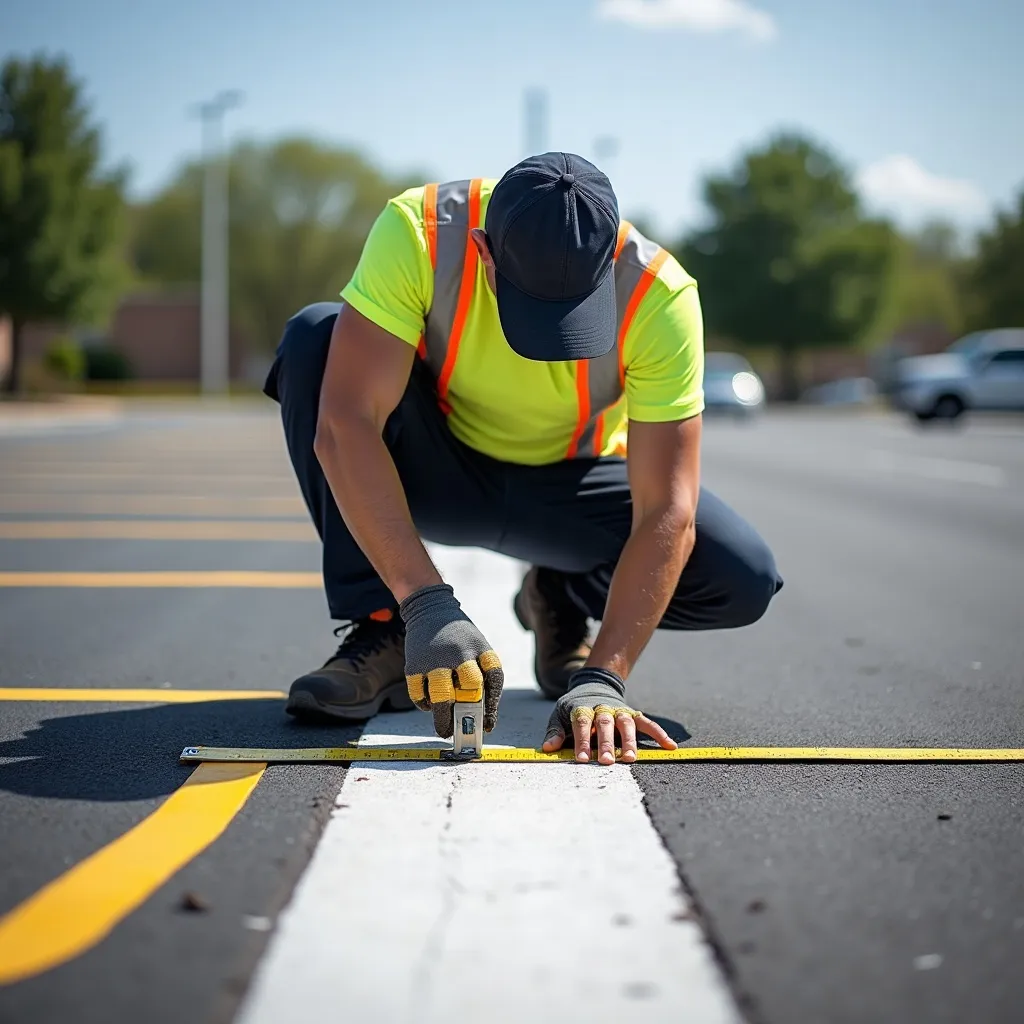
The Importance of Exactness in Parking Lot Security
Although often neglected, precision in parking lot painting plays an critical role in ensuring safety for both motorists and foot travelers. Precise paint applications help navigate cars and copyright structure in busy environments. Well-defined lines delineate parking spaces, traffic lanes, and pedestrian walkways, decreasing the danger of collisions and supporting an organized flow of traffic.
Moreover, accurate lines improve visibility, especially during low-light conditions. Distinct, well-defined markings are essential for drivers to rapidly recognize available spaces and travel securely. Additionally, the correct application of colors and symbols is vital; for example, blue markings indicate accessible parking, while yellow and white fulfill different purposes.
Neglecting precision can lead to misunderstanding, higher accidents, and possible liability issues for property owners. As a result, investing in careful parking lot painting is not just an visual preference but a essential aspect of public safety.
Key Advantages of Professional Parking Lot Paint Services
Professional parking area painting services deliver several advantages that extend beyond simple aesthetics. A major benefit is improved safety; clear and well-defined markings help directing vehicles, decreasing the likelihood of accidents. Moreover, these services improve visibility, particularly during nighttime or bad weather, making sure that drivers and pedestrians can safely move through the space.
Yet another benefit is complying with local regulations. Professional painting contractors are knowledgeable in the legal requirements and standards, ensuring that parking lots meet safety codes. This can prevent costly penalties and liabilities for owners of properties.
Moreover, professionally painted lines and symbols can enhance the overall look of the property, creating a welcoming environment for customers. This can positively impact business perception and draw in more visitors. Finally, using high-quality, durable materials extends the life of the markings, reducing the need for regular maintenance and saving money in the long run.
Excellent Supplies for Successful Parking Lot Painting
Effective parking lot striping depends on high-quality ingredients that ensure sturdiness and visibility. The selection of paint type plays a important role; acrylic-based water paints are favored for their quick curing and low environmental effect. In opposition, oil-based valuable resource paints supply better durability but take longer drying periods. Reflective additives can boost visibility, particularly at nighttime, making them a useful component to any paint formulation.
Line striping thermoplastics are becoming increasingly favored for their durability and wear resistance, delivering a clear and enduring marking of areas. Additionally, suitable primers need to be used to facilitate optimal bonding to multiple substrates, including asphalt and concrete. The application of high-grade sealers can safeguard painted lines from fading due to environmental conditions and vehicular wear. Ultimately, selecting the appropriate products is vital for accomplishing effective and long-lasting parking lot markings that enhance security and order.
Enhancing Driver Recognition Via Visibility
When operators can clearly see parking lot markings, their awareness and safety enhance significantly. High-visibility paint improves the definition of lines, symbols, and directional arrows, enabling for motorists to navigate complex parking layouts. This clarity reduces the likelihood of accidents caused by confusion or misinterpretation of spaces. Well-defined markings also promote compliance to traffic rules, such as yielding to pedestrians and maintaining proper distances between vehicles.
Moreover, judicious deployment of colors can further strengthen visibility. For instance, bright yellow or white markings stand out against asphalt surfaces, especially in low-light conditions. This superior visibility supports a safer environment for both motorists and pedestrians, minimizing the probability of collisions. Ultimately, putting resources toward precision parking lot painting not only enhances driver awareness but also advances a more organized and efficient parking experience, promoting overall safety in the area.
Maintenance Guidelines for Durable Parking Lot Paint
Using a pressure washer or a suitable cleaning solution can effectively restore the surface's condition.|Preserving parking lot paint is critical for ensuring sight lines and promoting protection. Routine inspections|Routine inspections are necessary; operators should inspect for deterioration, cracking, or flaking|deterioration, cracking, or flaking paint that may diminish legibility|reduce clarity. Regularly maintaining the pavement|Cleaning the surface routinely helps extract|extract grime, residue, and waste|grime, residue, and waste which can impact adhesion and durability|impact adhesion and durability. Applying a power washing system|Using a pressure washer or a suitable cleaning agent|suitable cleaning agent can efficiently restore|successfully improve the pavement's state|pavement's state.|Protecting parking lot paint is necessary for keeping visibility clear|keeping visibility clear and promoting safety|promoting safety. Frequent inspections|Regular assessments are essential|essential operators must assess|assess fading, chipping, or peeling|worn, cracked, or deteriorated paint that might impair visibility|obscure markings. Cleaning surfaces on a regular basis|Maintaining regular cleaning schedules helps get rid of|clear away dust, grease, and waste|dust, grease, and waste that can diminish strength and bonding|diminish strength and bonding. Utilizing a high-pressure washer|Using a pressure washer or an appropriate cleaning solution|a proper cleaning agent can effectively recover|effectively recover parking lot appearance|the surface's condition.|Caring for parking lot paint is vital for sustaining visibility and protecting users. Periodic evaluations are required; operators should identify discoloration, cracking, or flaking paint that could obscure markings. Regularly washing the pavement helps remove dirt, oil, and debris which can harm adhesion and lifespan. Using a power washer or an appropriate cleaning agent can effectively enhance parking lot appearance.
Plus, putting down a protective sealant can shield painted lines from the elements, strengthening durability against severe weather and constant use. It is advisable to schedule repainting every two to three years, contingent upon wear and tear, to maintain sharp lines and clear markings. Further, opting for high-quality, reflective paint can ensure better longevity versus standard options. By applying these preservation methods, property owners can confirm that their parking lot remains safe and visible for all users, decreasing the risk of accidents and improving overall functionality.
Why Spending on Superior Parking Lot Painting Preserves Your Budget?
Superior parking lot painting represents a wise expenditure that ultimately leads to cost savings. By selecting high-quality materials and professional solutions, property owners can ensure that the markings remain clear and long-lasting for extended periods. This longevity reduces the need for regular repainting, which can be both time-consuming and costly.
Additionally, clearly marked parking lots enhance security and reduce liability risks. Distinct markings and designated spaces reduce uncertainty among motorists, decreasing the probability of collisions. This preventive strategy can avoid expensive attorney costs and claim payouts.
Furthermore, attractive and well-maintained parking lots can improve property value and customer outlook. A visually appealing lot encourages more visitors, arguably increasing revenue for businesses. Essentially, investing in quality parking lot painting not only minimizes ongoing maintenance expenses but also cultivates a safer, more inviting environment, ultimately translating into substantial financial savings.
Commonly Asked Questions Customers Request
How Frequently Should I Recoat My Parking Lot Lines?
Parking lot lines should generally be restriped every 1 to 2 years, depending on external conditions and wear. Regular maintenance guarantees clear visibility, promoting safety for both vehicles and pedestrians in the parking area.
How Does Parking Lot Paint Impact the Environment?
Environmental damage from parking lot paint involves possible volatile organic compound releases, which lead to air pollution, and runoff containing chemicals that may damage local ecosystems. Selecting eco-friendly options can considerably mitigate these negative effects.
Can I be Able to Stripe My Parking Lot Lines Myself?
Yes, an individual can paint parking lot lines on their own. However, they should consider local requirements, use appropriate materials, and guarantee proper techniques for durability and prominence to achieve professional-looking results.
What Safety Guidelines Are Used During Painting?
When painting, essential safety measures involve putting on reflective safety clothing, positioning traffic cones in work zones, providing sufficient air flow to handle odors, confirming equipment is in good condition, and respecting local regulations concerning posted notices and vehicle flow.
What Impact Does Weather Have on Parking Lot Painting Projects?
Weather markedly shapes parking lot painting projects. Rain can slow down drying times, while extreme temperatures may compromise paint adhesion and durability. Windy conditions can result in overspray, challenging precision and overall quality of the finished work.